By Grace Alone
Through Faith Alone
In Christ Alone
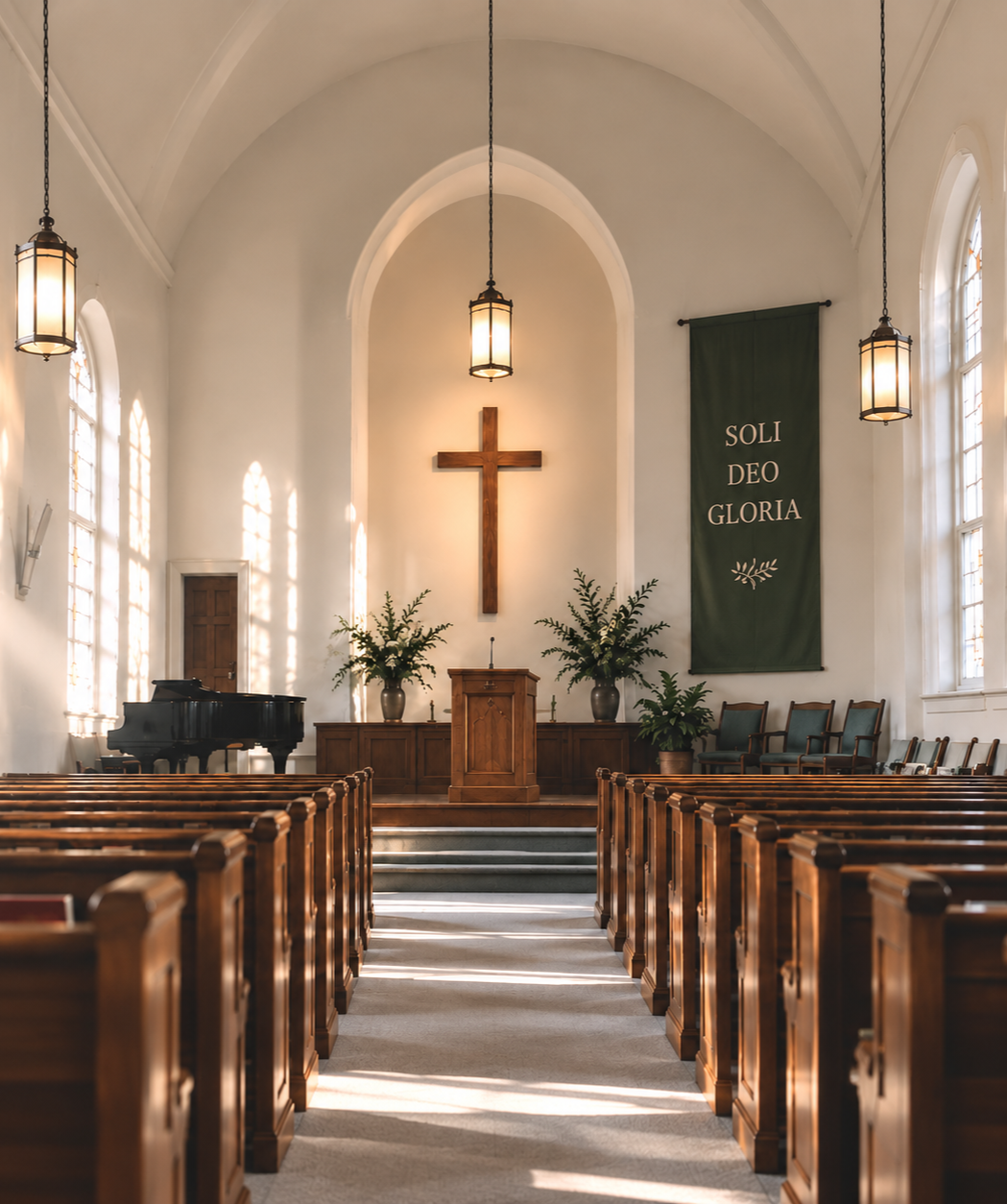
Heritage Reformed Baptist Church is a small church plant in east Texas. We currently hold Sunday Morning Worship at 10:30 a.m. at Hope Coffee Shop in Sunnyvale, Texas. The address is 129 N. Collins Road, Suite 1103, Sunnyvale, Texas 75182. After the worship service, we have the Lord’s Feast and enjoy fellowship amongst the body of Christ.
We look forward to seeing and meeting you when you find your way to us.
If you have any other questions for us you can send an email to elders@heritage-rbc.com. We will be happy to help you out.
By Grace Alone
Through Faith Alone
In Christ Alone
What We Believe
Expository Teaching
Heritage Reformed Baptist Church is a church that is strongly grounded in Grace, deeply rooted in faith, and completely centered on Jesus Christ. We are a confessional body of believers who are committed to the weekly expositional proclamation of God’s living word, the glory of God in all things, and the Reformed Baptist faith. Additionally, we stand firmly upon the absolute authority and infallable truth of God’s living word as being sufficient enough. At the same time, we also exposit God’s living word with the fundamental understanding of the Old Covenant in light of its fullfilment in Christ and the New Covenant.
A brief excerpt from Chapter 1, Paragraph 6 of The Second London Baptist of Faith states “The whole counself of God concerning all things necessary for his own glory, man’s salvation, faith and life, is either expressly set down or necessarily contained in the Holy Scripture: unto which nothing at any time is the be added, whether by new revelation of the Spirit, or traditions of men.”
-
Teaching the living word of God is a serious matter and should be done with the utmost integrity. A pastor who exposits the living word of God should do so in a manner that is clear, accurate, and free of eisegesis which is harmful and detrimental to the body of christ. This means that any biblical expositor, who is fully committed to exegetical teaching, will be convicted in four different areas of their pastoral ministry. The first area is conviction of the law of the Lord in which he meditates both day and night. The second area is conviction about the bible and its authoritative, sufficient and infalliable nature. The third area is conviction about preaching and the ability to exposit in a way that is understandable to it’s hearers. The fourth area is conviction about interpretation which is done through humility, dependence on the Lord, and prayer to God for the Holy Spirit to impart the understanding of God’s living and true word through him to the body of Christ.
Conviction About Contemplation & Meditation: Psalms 1:1, Psalms 1:2, Psalms 119:1, Psalms 119:12-16, Joshua 1:8
Conviction About the Bible: Deuteronomy 6:6-7, 2 Timothy 3:15-17, Psalms 119:105, Acts 17:11
Conviction About Preaching: Nehemia 8:1-8, 1 Corinthians 1:21, 2 Timothy 3, 2 Timothy 4:1-2
Conviction About Interpretation: Exodus 34:6, Numbers 23:19, Proverbs 26:4-5, 1 Samuel 15:29, 1 Corinthians 2:10-14, 2 Timothy 2:13, 2 Timothy, 3:16, Hebrews 6:18tion text goes here
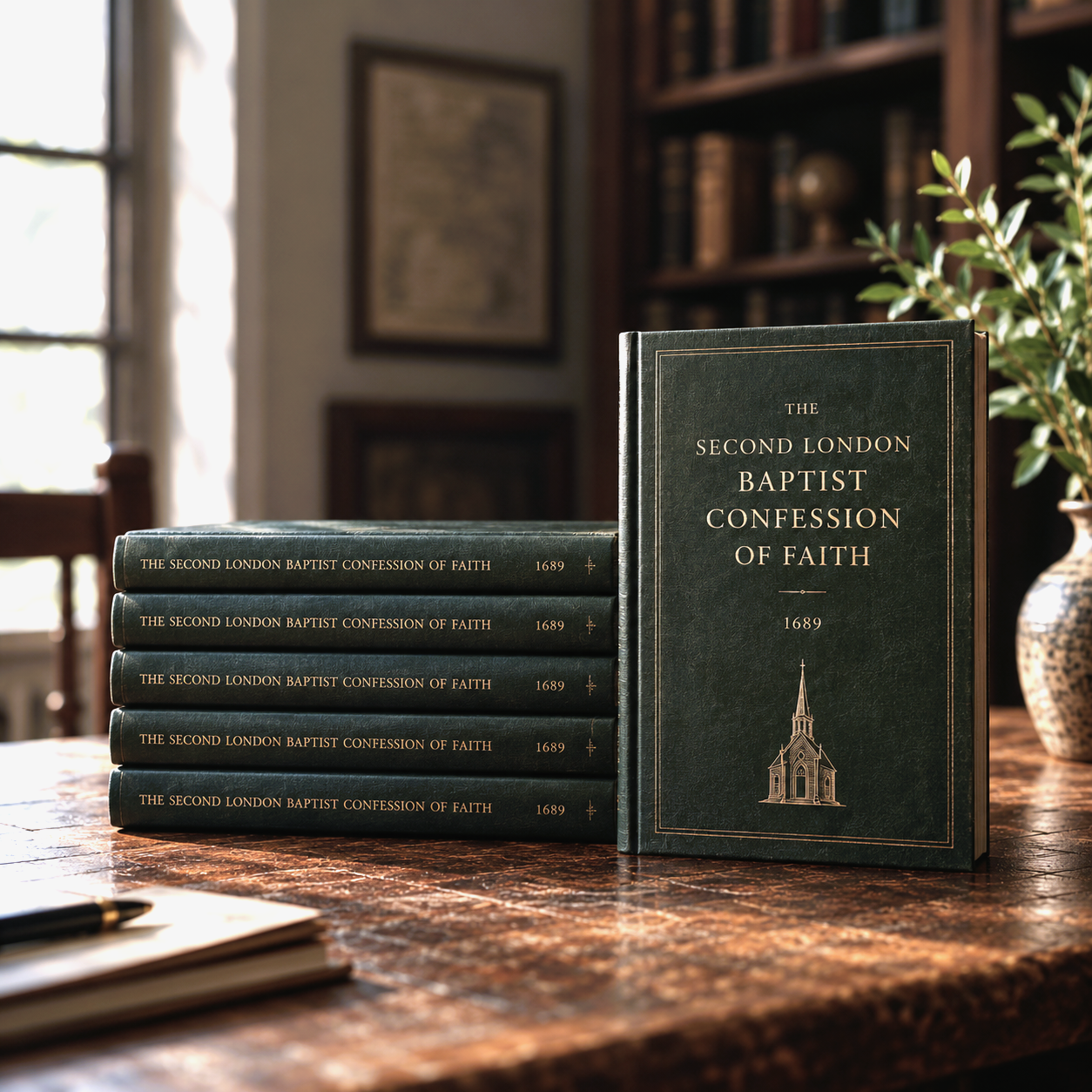
The 1689 2nd L.B.C.F
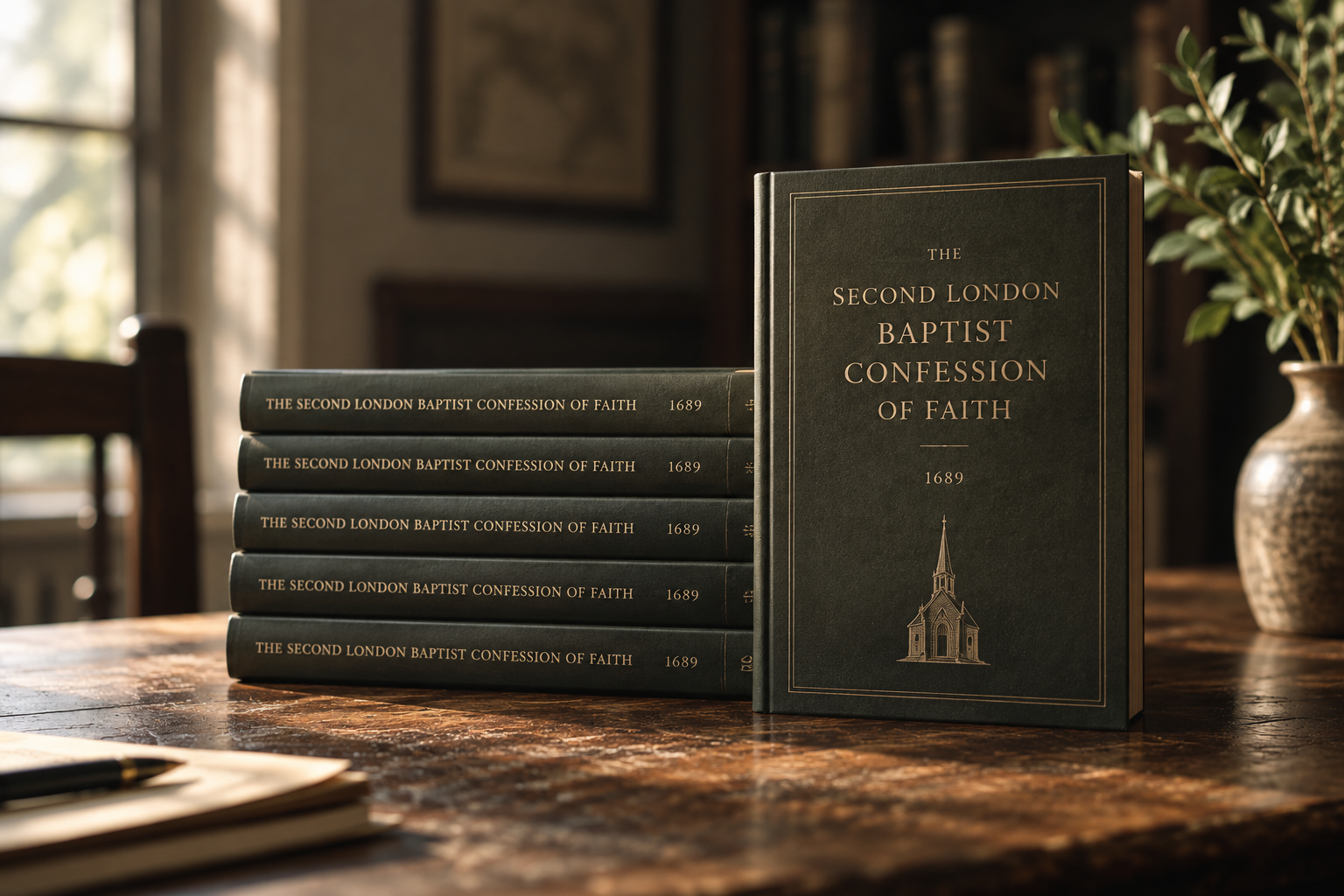
Heritage Reformed Baptist Church subscribes to the 1689 2nd London Baptist Confession of Faith. We also believe in the faithful and historic summaries of the doctrines as taught in the living and true word of God. While scripture alone remains our final and infallible authority, our confession serves as a clear and concise expression of the biblical convictions that God has put forth in his true and living word.
-
We believe the Holy Scriptures are the only sufficient, certain, and infallible rule of all saving knowledge, faith, and obedience.
We believe in one living and true God, eternally existing as Father, Son, and Holy Spirit, sovereign over all creation and working all things according to the counsel of His will.
We believe that mankind, having fallen in Adam, is dead in sin and unable to restore itself to fellowship with God, and that salvation is wholly of God's sovereign grace according to His eternal purpose.
We believe that Jesus Christ, the eternal Son of God and the appointed Mediator of the covenant of grace, became truly man while remaining truly God, perfectly obeyed the law, offered Himself as the once-for-all sacrifice for the sins of His people, rose bodily from the dead, ascended into heaven, and now intercedes for them.
We believe that those whom God has chosen in Christ are effectually called by the Holy Spirit, regenerated, granted repentance and faith, justified by Christ's righteousness alone, adopted as children of God, sanctified by His Spirit, and preserved by His power unto everlasting glory.
We believe that the local church is composed of those who credibly profess faith in Christ and obedience to Him, that baptism by immersion belongs to professing believers, and that baptism and the Lord's Supper are ordinances instituted by Christ for His churches.
We believe that Christ will return personally to judge the world in righteousness, that the dead will be raised, and that the righteous will enter everlasting life in the presence of God while the wicked will receive everlasting punishment. In all things, we desire our doctrine, worship, and life to be governed by the Word of God, for the glory of God alone, in accordance with the Second London Baptist Confession of Faith of 1689.
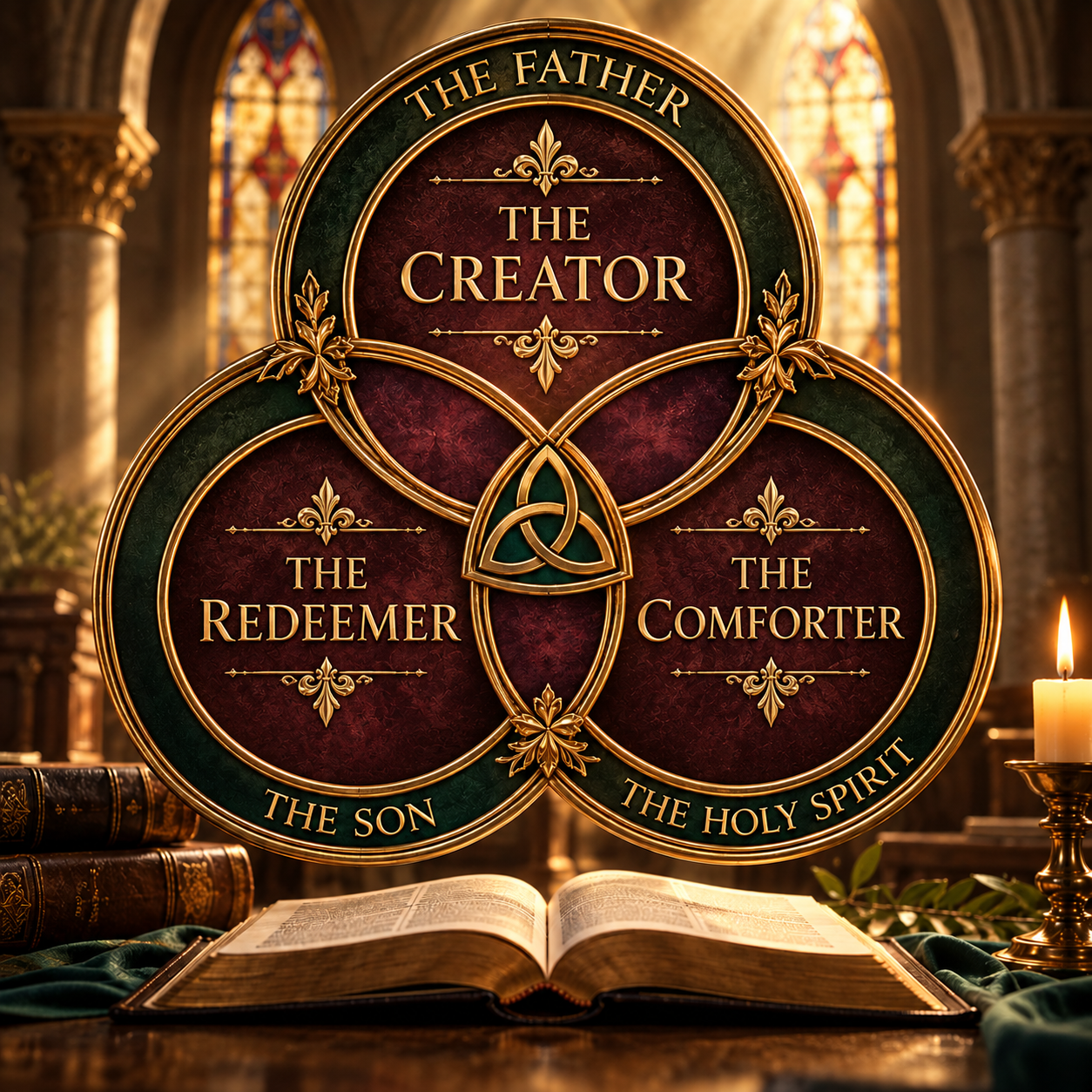
The Holy Trinity
Heritage Reformed Baptist Church believes in and teaches the doctrine of the Holy Trinity. We believe the catholic faith (not to be confused with the Roman Catholic Faith) is the universal faith which is held by all people, in all places, at all times. Furthermore, we teach about this faith in accordance to Holy Scripture, The 2nd London Baptist Confession of Faith, and the Athanasian Creed. As stated in Chapter 2 of The 2nd London Baptist of Faith under the section titled “Of God and of the Holy Trinity”, we believe in God as one God whose subsistence is in and of himself, infinite in being and perfection and whose essence cannot be comprehended by any but himself. In this divine and infinite being there are three subsistences which are the Father, The Son, and The Holy Spirit, of one substance, power, and eternity. Additionally, each has the whole divine essence, and yet the essence is undivided. To learn more about the Trinity expand the section below title “The Five Points of Trinitarianism”.
-
To further explain the structure of the Holy Trinity, we believe the Father is uncreated, nor begotten or proceeding ( i.e. absolutely nothing came before him nor an action or event that took place). Secondly, the Son is eternally begotten from the Father (i.e. proceeds from the Father). Lastly, the Holy Spirit proceeds from both the Father and the Son. Continuing further to explain, they are all infinite, without beginning, therefore but one God, who is not to be divided in nature and being, but distinguished by several peculiar relative properties and personal relations. This doctrine of The Holy Trinity is the foundation of all our communion with God, and our comfortable dependence on him. Furthermore, this doctrine is shown all throughout the Old and New Testaments, and is further upheld in the ordinance of Baptism as ordained by Jesus Christ.
To go into further detail about the Holy Trinity, there are five points of Trinitarianism which include the following: Essence, Processions, Properties or Persons, Relations, and Notions.
1) Essence: This is about the Nature of God. it is the “Whatness of God” or “What is this Being”. God is the uncreated one, the simple one, the singular one. This is why we say God is one. We can look at Deuteronomy 6:4 to see that it says “Hear, O Israel: The Lord our God, the Lord is One.” Furthermore God is simple and without parts. He is not composite or made up of anything such as species or genus. We have to understand that the three persons or subsistences do not make up or participate in God because God is not made up of anything. This is where we begin. This is our starting point because if we understand this point clearly, then in fact, this one point will govern everything else we have to say about The Holy Trinity.
2) Procession: This means going forth. This term explains how one goes forth from another. As stated earlier above, you can see now how the Son goes forth from, and is begotten by, the Father and the Holy Spirit proceeds from the Father and Son. Consequently, we distinguish them as “Generation or Begotten”. It can be understand as such, the Son comes from the Father into the world and since the Son is eternally from the Father it is called generation. With respect to the Holy Spirit, we can understand this procession as “Spiration”. Spiration is the act of breathing, or in theological terms, the method in which the Holy Spirit “Proceeds” from the Father and the Son. Additionally, we should also speak to the mission of the Son. The word “Mission” comes from the Latin which means “Sent”. As an example, the mission of the Son is sent forth eternally and begotten by the Father. Understanding this in these terms means the Son is always sent forth from the Father and the Holy Spirit is always sent forth from the Father and Son.
3) Person and Properties: We are talking about persons in this section. However, it is important to note, the persons are identified by their properties. The three persons are the Father, the Son, and the Holy Spirit. The three properties, in which we are to understand them, are Paternitity, Filiation, and Spiration.
A) Person = God the Father: Properties = Paternity (Fatherhood)
B) Person = The Son: Properties = Sonship (Filiation). A note of importance on Filiation: It is understood as the biological relationship between a parent and a child.
C) Person = The Holy Spirit: Properties = Spiration (Spirithood) A note of importance of Spiration, and as mentione earlier above, it is the act of breathing, or in theological terms, the way the Holy Spirit proceeds from the Father and the Son.
4) Relations: Ironically, this fourth has four relations. The four relations include the previous three that were already mentioned above. We have the Father’s relation to the Son (i.e. paternity). Next, we have the Son’s realtion to the Father (i.e. filiation). Third, we have the Holy Spirit’s relation to the Father and the Son (i.e. spiration or procession). The last relation, logically speaking, would be what is the Father and Son’s relation to the Holy Spirit? The answer would have to be spiration. Theologians have also been known to also call the realtion acitve and passive spiration.
5) Notions: In Volume 1, Page 257, of his work Institutes of Elenctic Theology, Francis Turretin, a Reformed theologian, explains that a notion designates the personal property or mark of distinction that characterizes one person of the Godhead from another. The personal notion defines how the divine persons are distinct while sharing the same divine essence and nature. As a result, notions as defined in this fifth section, cover the first four points of Trinitariansim. The Father’s relation to the Son is Paternity, and that mark’s the Father out with respect to the Son’s origin. The second is how the Son is marked out by his filiation. The third is how spiration and procession marks out the Holy Spirit origin from the Father and the Son (filioque). However, what do we do with the origin of the Father? In it’s most simplest terms, the Father has no origin. He is simply unbegotten or inascible. The word inascible is taken from the Latin “innāscibilis” which combines the negative prefix “in” (not) with “nascibilis” (capable of being born). The finality of this word means that the Father is entirely self-existent and has no beginning or prior cause.
As stated earlier in this section, in Chapter 2.3 of The 2nd London Baptist Confession of Faith, this doctrine of The Holy Trinity is the foundation of all our communion with God, and our comfortable dependence on him. Furthermore, this doctrine is shown all throughout the Old and New Testaments, and is further upheld in the ordinance of Baptism as ordained by Jesus Christ.
Genesis 17:1; Exodus 3:14; Exodus 34:6, 7; Deuteronomy 4:15, 16; Deuteronomy 6:4; 1 Kings 8:27; Nehemiah 9:32, 33; Job 22:2, 3; Psalms 5:5, 6; Psalms 90:2; Psalms 115:3; Psalms 119:68; Psalms 145:17; Psalms 148:13; Proverbs 16:4; Isaiah 6:3; Isaiah 46:10; Isaiah 48:12; Jeremiah 10:10; Jeremiah 23:23; Ezekiel 11:5; Daniel 4:25, 34, 35; Nahum 1:2, 3; Malachi 3:6; Matthew 28:19; John 1:14, 18; John 4:24; John 5:26; John 14:11; John 15:26; Acts 15:18; Romans 11:34–36; 1 Corinthians 8:4, 6; 2 Corinthians 13:14; Galatians 4:6; 1 Timothy 1:17; Hebrews 4:13; Hebrews 11:6; 1 John 5:7; Revelation 5:12–14
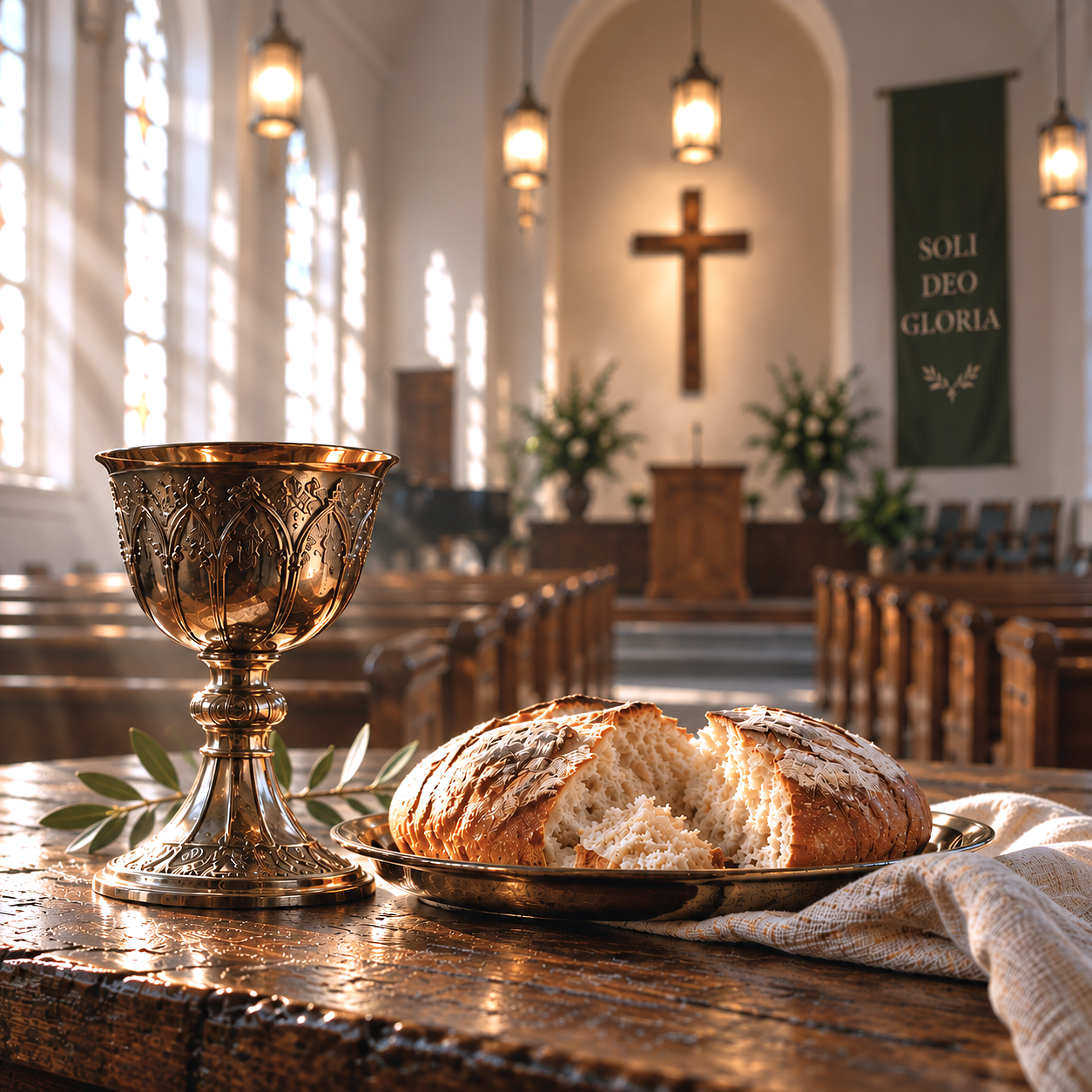
The Lord’s Supper
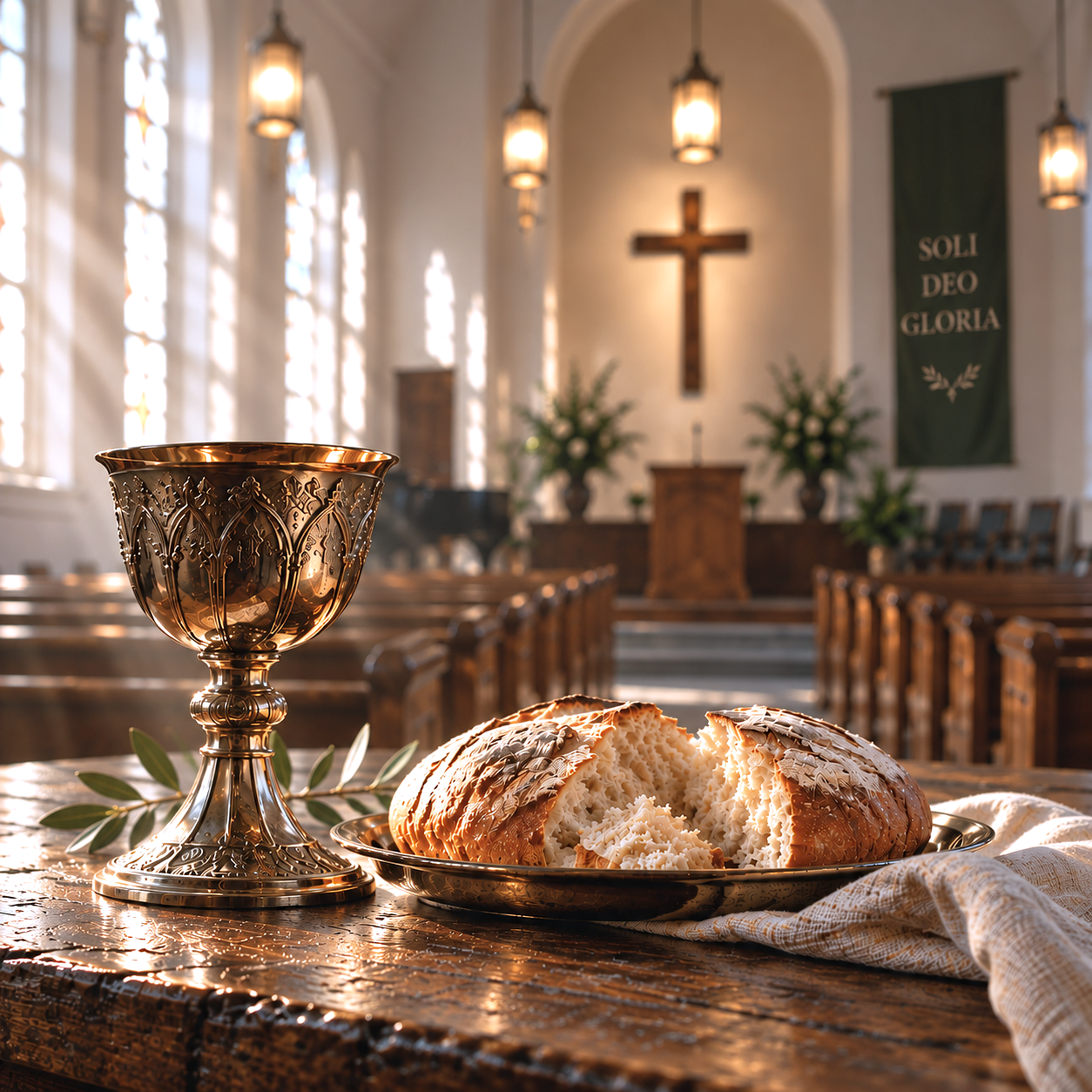
Heritage Reformed Baptist Church believes in the weekly observance of the Lord’s Supper. As outlined in Chapter 30 of the 1689 Second London Baptist Confession of Faith, we believe in the perpetual rememberance of Christ’s sacrifice, the confirmation of faith, and a bond of communion with Christ and the church. We also believe the Lord’s Supper is a means of grace where the believers in Christ spiritually feed on the body and blood of Christ through faith, as opposed to the mere memorial or a physical transformation of the elements. We believe that Christ is bodily in heaven and spiritually present through the Holy Spirit.
At Heritage Reformed Baptist Church, we believe in the weekly serving of the Lord’s Day feast. Our elders perform weekly communion that is aligned with the biblical rythm of worship which has been the same since the day Jesus ordained at his Last Supper.
Expand the section below titled “About the Lord’s Supper” to learn more.
-
The simple truth, regarding the Lord’s Supper, is to be understood correctly, exposited right, and taken weekly in faith and obedience to our Lord’s command. This ordinance is much more a command instituted by Jesus Christ than a suggestion. He was very specific in the words he chose to institute this ordinance. All to often churches are picking and choosing when to participate in the Lord’s Supper. Picking and choosing when to participate in the Lord’s Supper is in total contradiction to what Holy Scripture says. Furthermore, why would a shepherd deny his flock the opporunity to feast? Is it not the shepherd’s responsibility to make sure his flock is safe and fed? In 1 Corinthians 10:16, Paul asks the following question: “The cup of blessing that we bless, is it not a participation in the Blood of Christ? The bread that we break, is it not a participation in the body of Christ?”
1st Direction
Looking Backward at Your Savior:
The Lord’s Supper & Remembering Christ Regularly - This is clearly shown in Luke 22:14-23. Jesus instituted how to partake in his rememberance. Jesus states in 1 Corinthians 11:24-26 “Do this in rememberance of me.” The word used here is “Do”, which is an action verb and indicates the use of present tense. This means to keep doing it again and again, over and over. Then, in further instructions to the Corinthians, Paul states “As often as you eat this bread and drink the cup, you proclaim the Lord’s death until he comes.” The word “often” is the important piece here. Thayers Greek Lexicon explains the word “often” as setting a frequency of occurence. From a reformed baptist theological set of lenses, it is the repitition (i.e. weekly observance) of the Lord’s Supper that exposes human limitations, divine patience, and calls the church to perseverance. The repetitive nature of the Lord’s Supper and the refreshment of one another defines the normal Christian experience. It is this motif of recurring trials matched emphatically with recurring grace. Logically, the Lord’s Day gathering (i.e. Worship & Communion of the Saints every Sabbath), along with the Lord’s Supper which visibily proclaims the death, burial, and resurrection is a repetitive rythm done weekly and not sporadically.
2nd Direction
Looking Forward to Your Final Salvation:
The Weekly Pattern of the Word & Table Together - The life after pentecost is a good place to start with respect to what the Lord’s Supper continued to look like. In Acts 2:42, Luke describes how “They devoted themselves to the apostles’ teaching and fellowship, to the breaking of bread and the prayers.” Again, in Acts 20:7 Luke is recording the pattern of the gathered church. He states “On the first day of the week (that first day of the week is Sunday which is the Sabbath. The first day of the week has been the Lord’s Day since the resurrection of Christ on the first day of the week.) when we were gathered together to break bread, Paul taled with them…” The weekly exposition of the Holy Scripture and observance of the Lord’s Supper shows how the “Word & Table” are not competing factors, but rather, complimentary ordinances which are clearly linked together as hown in God’s living and true word. Weekly worship should never be viewed as an occassional participation in the communion.
3rd Direction
Looking Inward at Your Own Sin:
The Lord’s Supper as a Present Participation in Christ - As mentioned earlier, the Lord’s Supper is a participatory act carried out on a weekly rythm which is on the Sabbath Day, the Lord’s Day, the seventh day which in fact is Sunday. Not only is it the seventh day; consequently, it is also the first day of the week. We are to end and begin our week with the same rythm. We end and begin our week by protecting the sabbath and actively participating in the fellowship, sharing, and communion of the saints. Additionally, as shown in Chapter 30.7 of The 2nd London Baptist Confession of Faith, and 1 Corinthians 11:28 and as the active body of Christ, we are to look inwardly examine ourselves and our sins each everyday and repent to be able to continue as worth receivers in order to spiritually receive and feed upon Christ crucified, and all benefits of His death. More importantly, we understand the Lord’s Supper does not save, but nourishes. It does not earn us favor, but it strengthens our faith. It does not create unity, but it does deepens the unity Christ has already purchased for all of us. If the Lord’s Supper, is called a “means of grace”, then why would we ever withhold this means of grace from the church? Scripture, in and of itself, states this means of grace as a regular provision for our spiritual health within the body of Christ. It should be clearly understood that neglecting the church or withholding the Lord’s Supper, feeding spiritually on the death, burial, and resurrection of Jesus Christ is extremely detrimental to the spiritual health of the church. Weekly communion, without a doubt, keeps this covenant renewal directly in our path everyday. Additionally, it exposes the fact that we should be in a constant state of quick repentance individually. We should be in reconciliation with one another always. Lastly, we should rejoice with one another in the grace that holds us fast. As a result, our shared unity magnifies the gospel week after week.
4th Direction
Looking Around at the Saints:
The Supper as Covenant Renewal - Paul states in 1 Corinthians 10:17 “Because there is one bread, we who are many are one body, for we all partake of the one bread.” This is why it is so important the we are truly worthy recepients who can participate in a worth manner. If you don’t look inwardly to examine your heart, then confess your sins, and make peace with your brothers then how can you worthily partake in the Lord’s Supper. Paul expressely shows his concern of the Lord’s Supper in 1 Corinthians 11:18-33. The message of unity with the church with respect to the Lord’s Supper is highlighted in the above mentioned passage. Paul addresses the problem of division within the church. He addresses the problem of participating in the Lord’s Supper in an unworthy manner. Lastly, he addresses unity in the body of Christ. Jesus also institutes the manner in which the Lord’s Supper is served. In 1 Corinthians 11:24-25, Jesus says “This is my body, which is for you. Do this in remembrance of me.” The Jesus took the cup and said “This cup is the new covenant in my blood. Do this, as often as your drink it, in remembrance of me.”

The Believer’s Baptism
Heritage Reformed Baptist Church teaches and practices Beliver’s Baptism as set forth in Holy Scripture. This is called Credobaptism. This baptism is for regenerate belivers only who give a credible personal profession of repentance for their sins and faith in Jesus Christ. Additionally, it is administered by immersion to reflect the death, burial, and resurrection of Christ. We consider this a sign and seal of union with Christ. Chapter 29.1-5 of the 2nd London Baptist Confession of Faith explains what Baptism is and who ordained it. The scriptures shown below are the foundation to our beliefs. Expand the section below title “A Believers Baptism” to learn more.
-
Samuel Renihan stated “Baptism is…a two-way declaration. On the one hand, it is God’s visible promise that all who are in His Son are new creations by virtue of their union with Christ in His death and resurrection. And on the other hand, it is the individual’s preofession of faith in those very promises.” There is much argument about the subject and modes of baptism. However, there really shouldn’t be any arguement as to either. The Holy Scripture clearly states that it is a “Believer’s Baptism”. Without a doubt, we don’t hardly have the space to explain in its fullness, the relationship between the old covenant and new covenant with respect to baptism. However, this section will briefly outline the arguement of Credobaptist versus Paedobaptis and why one is correct and the other is not. Expand the section below titled “A Believers Baptism” to learn more.
Let’s take a look at a James Bannerman and Louis Berkhof, a couple of paedobaptis believing theologians. The third theologian, John Spilsbery does not believe in infant baptism.
James Bannerman, a 19th Century paedobaptist, even says “The immersion in water of the persons of those who are baptized is set forth as their burial with Christ in His grave because of sin; and their being raised again out fo the water is their resurrecrtion with Christ in His rising again from the dead because of their justification.” He goes on to explain “Their burial in water, when dying with Christ was the washing away of the corruptness of the old man beneath the water; and their coming forth from the water in the image of His resurrection was their leaving behind them the old man with his sins and emerging into newness of life. Their immersion beneath the water, and their emerging again, were the putting off the corruption of nature and rising again into holiness, or their sanctification.” Does this sound like anything an infant can comprehend? Does Bannerman’s explanation even remotely sound like this is describing sprinkling as baptism for infants? Does Bannerman’s explaination sound like a total immersion under and emerging out of water? Contrary to popular protestant belief, tradition should never take precedence over what the living word of God has given to us.
Louis Berkhof, who is also a paedobaptist, had this to say with respect to Christ’s Great Commission in Matthew 29:19: “They who accepted Christ by faith were to be baptized in the name of the triune God, as a sign and seal of the fact that they had entered into a new relation to God and as such were obliged to live according to the laws of the Kingdom of God.” Can an infant accept anything by faith? Since baptism is by immersion and emergence, and, infants do not have the comprehension necessary to proclaim in type of belife; consequently, infant baptism is definitely not according the Holy Scripture.
John Spilsbery, a 17th century Baptist, doesn’t hold anything back regarding his commentary on paedobaptism. Spilsbery said “to Baptize infants, makes the holy ordinance of God a lying sign, because none of those things can be expected in an infant which the said ordinance holds forth or signifies in the administration thereof, which is the parties regeneration and spiritual new birth; a dying and burying with Christ in respect of sin, and a rising with him in a new life to God, and a confirmation of faith in the death and resurrection of Christ, and a free remission of sin by the same; as 1 Cor. 15:29, Rom. 6:3&4, Col. 2:12, 1 Pet. 3:21, Acts 2:38, none of all which can be expected of an infant.”
It is hard to ignore the links between the Holy Trinity, baptism and regeneration. The baptism is given by the local church to those who are born again as an outward sign of what has happened to the new born believer. It signifies the Holy Trinity, along with the death, burial, and resurrection of Jesus Christ. The Holy Spirit, however, is what works inside of a regenerate person. The inward work of the Holy Spirit will then manifests itself outwardly as good works of God. It is clear, that the New Covenant, ratified by the Blood of Christ, has established water immersion baptism as an outward sign and symbol of the Holy Spirit’s inward reality about the application of Christ’s work to the Christian. Credobaptism is a Believer’s Baptism by immersion and emergence. Paedobaptism is not scripturally sound and is a departure from the very thing we should be holding fast to. Paedobaptism is a departure from the living and breathing word of God. The tradition of a thing should never take precedence to the living and breathing word of God. The word of God is the sword in which we measure any other belief system to.
Matthew 3:16, Matthew 28: 18-20, Mark 1:4-8, Mark 16:15-16, John 3:3-8, John 3:23 Acts 2: 37-42, Acts 8:12, Acts 8: 36-39, Acts 9:18, Acts 10:44-48, Acts 11:16-18, Acts 22:16, Romans 6:1-5,1 Corinthians 12:13, 2 Corinthians 5:14, Galatians 3:26-27, Galatians 4:6, Ephesians 4:4-5, Colossians 2: 11-15, 1 Peter 3:21-22